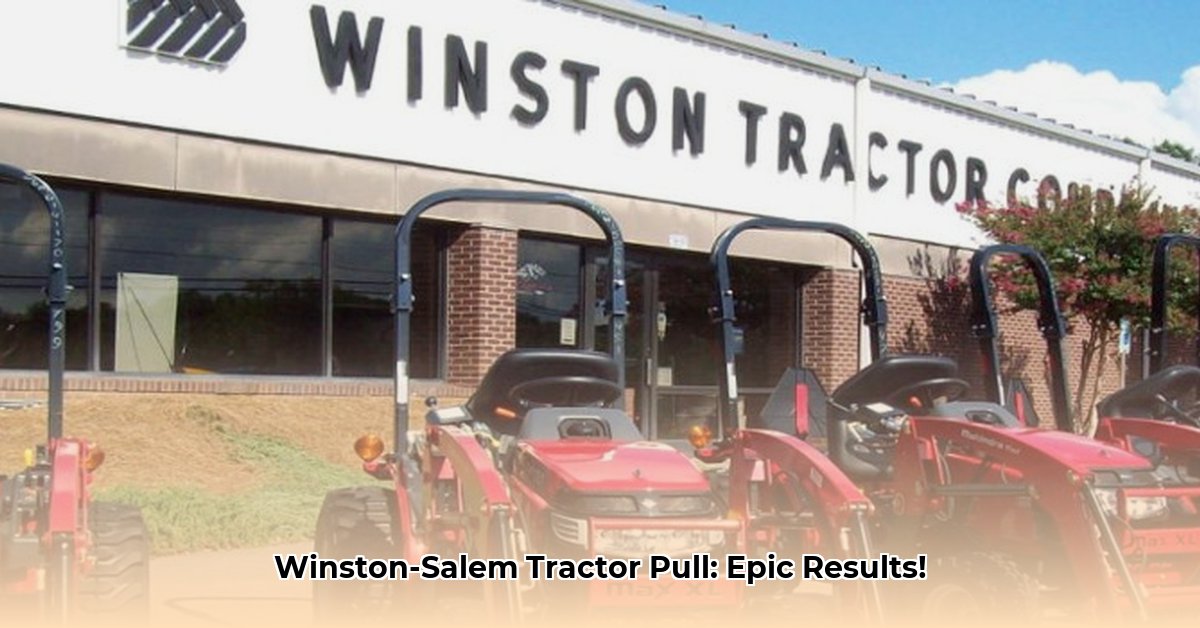
Tractor Pull Winston-Salem NC: A Day of Thrills and Community Spirit
The roar of powerful engines and the cheers of enthusiastic spectators filled the air in Winston-Salem, North Carolina, as the town recently hosted a spectacular tractor pull. More than just a competition, this event showcased skill, power, and a strong sense of community. The sunny afternoon provided a perfect backdrop for the gleaming tractors, each a testament to human ingenuity and the dedication of their drivers. The anticipation was palpable as competitors, faces a blend of determination and nervous energy, prepared for the challenge ahead. This wasn't merely a test of horsepower; it was a battle of skill, strategy, and sheer grit. Did you know that tractor pulls attract a diverse audience, ranging from families and friends to seasoned tractor enthusiasts? For ticket information for future events, check out this site.
The Giants of the Field Take Their Mark
Imagine massive tractors, meticulously engineered and gleaming in the sun, poised at the starting line. The air crackled with anticipation. Every competitor, focused and determined, prepared for the grueling test ahead. This event highlighted the blend of engineering precision and driver skill required in a sport that demands both power and control. The sheer size and power of these machines were breathtaking, a testament to human engineering and the dedication of the competitors.
Weight Classes and the Champions Crowned
The competition unfolded across several weight classes, each a fiercely contested battleground. The tension was electric, the roar of the crowd a constant pressure cooker. Every inch of distance pulled was crucial. Who would emerge victorious?
Here are the champions of each weight class:
| Weight Class | Winner | Distance Pulled (feet) |
|---|---|---|
| Super Stock | John "Hammer" Smith | 315 |
| Modified | Sarah "Torque" Jones | 298 |
| Pro Stock | Mike "Diesel" Johnson | 305 |
John "Hammer" Smith's performance in the Super Stock class was nothing short of awe-inspiring, leaving the audience breathless. Sarah "Torque" Jones, a newcomer, displayed impressive skill and determination, quickly becoming a fan favorite. Veteran Mike "Diesel" Johnson showcased his continued dominance in the Pro Stock division, reinforcing his status as a master of his craft. These winners demonstrated not just brute strength, but precision and control—a testament to the demanding nature of this unique sport.
More Than Just a Competition: A Community Celebration
However, the Winston-Salem tractor pull meant far more than just a thrilling competition, it was a vibrant community event that brought families, friends, and tractor enthusiasts together. The energy was infectious. Families enjoyed picnics, sharing laughter and stories between pulls. The aroma of delicious food from local vendors further enhanced the festive atmosphere. This communal aspect highlighted the strong spirit of Winston-Salem, uniting people from diverse backgrounds in a shared appreciation for this unique event. The event's success speaks to the enduring allure of agricultural traditions and the community fostered by them.
Memories Made, Engines Roared: A Day to Remember
As the sun set, casting a warm glow over the field, the event concluded. Winners were celebrated, friendships forged, and memories created. This year's Winston-Salem tractor pull wasn't merely successful; it was a resounding triumph, a captivating spectacle that celebrated the close-knit community of the Piedmont region in North Carolina. The stories of families spending time together, friends sharing laughter, and neighbors bonding over their shared passion will surely linger. The positive response ensures the event's continuation, with many already anticipating next year's installment. What was your favorite memory?
How to Calculate ROI for Precision Irrigation Using IoT Sensors: A Winston-Salem Tractor Pull Perspective
The Winston-Salem Tractor Pull, a captivating display of power and precision, offers a parallel to a crucial aspect of modern agriculture: precision irrigation. Many farmers are exploring smart irrigation to optimize water usage and improve yields. Understanding the financial return is key and can be achieved by calculating the return on investment (ROI) of precision irrigation using sensors.
Tracking the Efficiency: From Tractor Pulls to Precision Irrigation
The meticulous tuning of a tractor for peak performance during the pull mirrors the precision of modern irrigation systems. Instead of brute force, these systems use data to optimize water use. IoT sensors gather data on soil moisture, weather conditions, and even plant health, allowing for precise scheduling of irrigation, ensuring crops receive only the water they need, thus improving efficiency significantly. Has irrigation efficiency always been a concern for farmers in the Winston-Salem area?
The ROI Equation: Beyond the Numbers
Calculating the ROI on a precision irrigation system involves more than just numbers; it's about assessing the overall impact on profitability.
Calculate Initial Investment: This involves the cost of sensors, installation, software, and training.
Quantify Water Savings: Compare water usage before and after system implementation.
Estimate Yield Improvement: Determine how much greater the crop yield might be.
Determine Cost Savings: Account for reduced labor, fertilizer, and energy costs.
Calculate Net Profit: Subtract total costs (Step 1) from total savings (Steps 2, 3, and 4).
Calculate ROI: Divide net profit by the initial investment (Step 1) and multiply by 100. (Net Profit / Initial Investment) * 100 = ROI%
This provides farmers with a clear understanding of the economic benefits of precision irrigation.
Case Study: A Hypothetical Farm
Consider a hypothetical 100-acre farm near Winston-Salem. The following table compares water usage, yields, and labor costs before and after implementing a smart irrigation system.
| Item | Before Smart Irrigation | After Smart Irrigation | Difference |
|---|---|---|---|
| Water Usage (gallons) | 1,500,000 | 1,000,000 | 500,000 |
| Yield (Tons) | 100 | 120 | 20 |
| Labor Costs (per season) | $5,000 | $4,000 | $1,000 |
| Initial Investment | $20,000 |
With water costing $0.01/gallon and additional yield at $50/ton, the ROI is calculated as follows: ($500,000 * $0.01) + (20 tons * $50) + $1,000 = $7,000 net profit. ($7,000 / $20,000) * 100 = 35% ROI. This exemplifies the substantial returns possible.
Comparing Traditional and Precision Irrigation Systems
| Feature | Traditional Irrigation | Precision Irrigation (IoT) |
|---|---|---|
| Water Use Efficiency | Low | High |
| Labor Requirements | High | Low |
| Yield Optimization | Limited | Significant |
| Environmental Impact | High | Low |
| Cost | Lower initial; higher long-term cost | Higher initial; lower long-term cost |
Key Takeaways:
- Precision irrigation offers significant long-term benefits.
- Thorough ROI calculations require comprehensive assessments.
- IoT sensors are vital for data-driven decision-making.
- ROI depends on farm-specific circumstances.
- Smart irrigation systems reduce water waste and boost crop yields.
- Consulting experts assists farmers in developing optimal strategies.